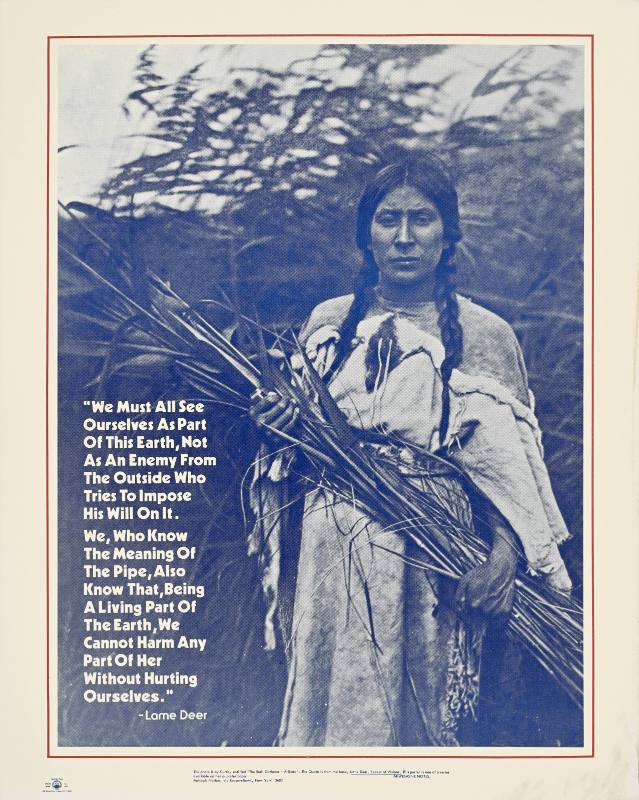
The photograph in this poster was taken in 1908 by Edward Curtis, an American photographer who spent three decades documenting Native Americans for his monumental project The North American Indian, published in 20 volumes between 1907 and 1930. Though unprecedented in scale, Curtis’s work was shaped by some of the notions about Native people that were held by certain white Americans of his era; they tended to romanticize Native life and believed that they must record images of a “vanishing race” through what anthropologists called “ethnographic salvage.” Such images aimed to freeze Indigenous people in an imagined, idealized past, ignoring evidence of contemporary Native existence or the sense of a future for Native communities. Such ideas are represented here in the figure of the woman standing alone with her gathered rushes, posed as a timeless “noble savage” rather than as a person navigating the harsh realities of an early 20th-century reservation. When paired with the words of Lakota medicine man Tȟáȟča Hušté (John Fire Lame Deer), the central figure in this Akwesasne Notes poster is transformed from an ethnographic specimen to a land defender. The word “we” suggests solidarity across tribes and time, asserting that Native women are not isolated figures in nature but active custodians of threatened territories. This reclamation demonstrates what is known as visual sovereignty: the deploying of images meant to document extinction to insist on continued presence and collective resistance.
For inquiries about image licensing, please contact collections@posterhouse.org.